

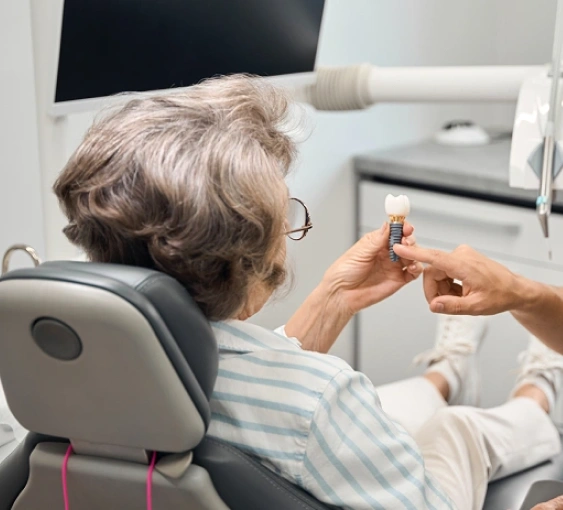
Achieving Precision in Your Implant Placement
At Premier Dental Esthetics, we use guided implant surgery to ensure a precise and successful dental implant placement. Guided implant surgery utilizes advanced technology to create a detailed, customized plan for the placement of your implants. This approach allows for greater accuracy, faster recovery, and a smoother overall experience.
Guided implant surgery is particularly beneficial for patients with complex cases or those who want the most efficient and effective treatment possible. With this technique, we can minimize risks and ensure that your implants are placed in the optimal position for both function and aesthetics.

What is Guided Implant Surgery
Guided implant surgery is a technique that uses digital imaging and 3D technology to plan and guide the placement of dental implants. Before the procedure, we create a detailed 3D model of your mouth, which allows us to map out the ideal position for each implant. A custom surgical guide is then made based on this model to ensure precise placement during the procedure.
This technique allows us to perform the surgery with greater accuracy, resulting in a quicker, more comfortable experience for you. The use of advanced imaging and guided tools helps reduce the chances of complications and ensures the implants are placed with the highest level of precision.
Benefits of Guided Implant Surgery
Guided implant surgery offers numerous advantages:
- Precision Placement: Using 3D imaging, we can plan the most accurate implant placement, reducing the margin for error and ensuring a better fit.
- Minimized Surgery Time: With guided surgery, the procedure is faster and more efficient, reducing your time in the chair.
- Faster Healing: Because the surgery is more precise, there is less trauma to the surrounding tissue, which leads to faster healing and less post‑surgical discomfort.
- Optimal Implant Positioning: The 3D planning ensures that the implants are placed in the best position for maximum stability, function, and aesthetic appearance.
- Reduced Risk of Complications: With guided surgery, we can avoid vital structures like nerves and sinuses, reducing the risk of complications during the procedure.
The Guided Implant Surgery Process
Guided implant surgery is a highly organized process designed for accuracy and patient comfort:
- Initial Consultation and Assessment: We begin with a consultation to assess your oral health and determine if guided implant surgery is right for you. During this visit, we take digital X‑rays and 3D scans of your mouth.
- Treatment Planning: Using the 3D scans, we create a customized treatment plan that maps out the exact placement of your implants. This plan helps us design a surgical guide specific to your needs.
- Surgical Guide Fabrication: A custom surgical guide is created based on your scans and treatment plan. This guide is used during the surgery to ensure that each implant is placed in the ideal position.
- Implant Placement: The implants are placed with precision using the surgical guide. This step is minimally invasive and ensures quick placement with minimal disruption to surrounding tissue.
- Healing and Restoration: After the implants are placed, they will fuse with the jawbone over the next few months. Once the implants have fully integrated, we place custom‑made crowns or bridges to complete the restoration.
Ideal Candidate for Guided Implant Surgery
Guided implant surgery is an excellent option for patients who need precise and efficient implant placement. Ideal candidates are those who have lost one or more teeth and are seeking a long-term, stable solution. Patients with complex cases or those who need multiple implants can benefit greatly from the precision of guided surgery. Additionally, individuals with sufficient bone density for implant placement or those who can undergo bone grafting may be good candidates for this procedure.
If you're looking for the most accurate and minimally invasive approach to dental implant surgery, guided implant surgery can be a great fit. During your consultation, we will assess your overall oral health, discuss your goals, and determine if guided implant surgery is the best option for your needs.
Experience Precision With Guided Implant Surgery
If you are looking for a more precise, efficient, and comfortable dental implant experience, guided implant surgery at Premier Dental Esthetics may be the perfect solution for you. With the help of advanced technology and our skilled team, you can enjoy a successful and long‑lasting smile restoration.